You know that feeling when you decide you really need to get more organised?
So you download an app, buy a new notebook or spend a couple of hours setting up a system that is DEFINITELY going to make everything easier.
Except somehow, getting organised seems to have become another job in itself.
I’ve been doing exactly this while getting ready to launch Find Your Focus, and after spending four or five hours trying to create a system that was supposed to save me time, I realised I might be going about this completely the wrong way.
And I think I’ve finally worked out what the problem is...
More...
How organised would you say you are?
Are you one of those people who always seems to know exactly where everything is? Maybe you’ve got nice folders. Perhaps things are even colour-coded.
Or are you a little bit more like me?
You really, really want to be organised. You’ve probably tried to be organised many times. Maybe you’ve bought a new notebook or downloaded a fancy app and thought, This is it. This is going to change everything. I’m finally going to become an organised person.
And then, three weeks later, you’re back to writing something important on a random piece of paper you’ll never find again. Pah.
If organisation comes naturally to you, this blog might not be for you. But if you know you’d benefit from being a little more organised, yet somehow none of the systems you try seem to stick, I think this might help.
Because recently I’ve been trying to get myself more organised, and it’s made me realise something quite important. Maybe you don’t need a better organisational system. Maybe you need a simpler one that works with the way you actually are.
Because when you’re running a private practice, staying organised isn’t really about having colour-coded folders or the perfect productivity app. It’s about spending less time trying to keep track of everything and having more time and headspace for the work that actually matters.
Why getting organised in private practice can feel so difficult
Before we go any further, I want to be clear that this isn’t about procrastination or perfectionism. Of course, both can get tangled up with organisation, but that’s not what I’m talking about here.
I’m talking about those times when you genuinely want to get on with something, but you know that unless you have some sort of system to keep track of it all, things are going to start falling through the cracks.
That’s exactly where I’ve found myself recently because I’m getting ready to launch something new called Find Your Focus. It’s a 1:1 session for counsellors who are doing lots of things to try to grow their private practice but have reached the point where they don’t know where their time and energy would be best spent anymore.
We look at what’s happening in your practice, what you’ve already tried, what’s working and what isn’t, and work out what deserves your attention now. The idea is that you can stop trying to keep all those different plates spinning and feel more confident that the things you’re spending your time on are actually the right things for you.
Ironically, launching something called Find Your Focus has required me to become considerably more organised.
There are emails to send, podcasts and blogs to prepare, social media posts, workshops, dates, deadlines and lots of little jobs that have to happen before something else can happen. And I do NOT have the kind of memory that can hold all of that, so I knew from the start that I needed some sort of system.
Maybe you’ve had something similar in your private practice. Perhaps you’re trying to keep track of your marketing, blog ideas, social media, enquiries, admin or simply all those things you keep thinking, I must remember to do that.
It’s not that you don’t want to do them. You just need somewhere reliable to put everything so your brain doesn’t have to do all the heavy lifting.
Do you really need another organisational tool?
My first brilliant idea was to use my Rocketbook. If you’ve never seen one, it’s basically a physical notebook with pages you can write on and then wipe clean. Mine has a calendar in it, and I thought it would be perfect.
Unfortunately, the calendar wasn’t big enough for my awful, scrawly handwriting.
So I moved on to Trello. I’ve used Trello for years and I really like it, but I needed it to work in a particular way with my Google Calendar and — I’ll spare you the deeply uninteresting details — I couldn’t quite get it to do what I wanted.
I tried doing it one way, then another way, then something else. Four or five hours later, I realised I had successfully spent an enormous amount of time trying to create a system whose entire purpose was supposed to save me time.
Excellent work, Jane.
And this wasn't my first attempt at becoming An Organised Person. Over the years I’ve tried Airtable, Notion, Asana, Trello, Rocketbook, Google Docs, Google Sheets and all manner of physical notebooks and planners.
And I think the sheer number of choices is part of the problem. There are so many ways to organise ourselves, and every one seems to promise that this is the thing that will finally make everything easier.
But how on earth are you supposed to know which one will work for you?
I wanted to be organised like Fifi
My friend Fifi Mason is very different from me when it comes to this stuff. She has a real clarity of thought, is technically minded and very good with tech.
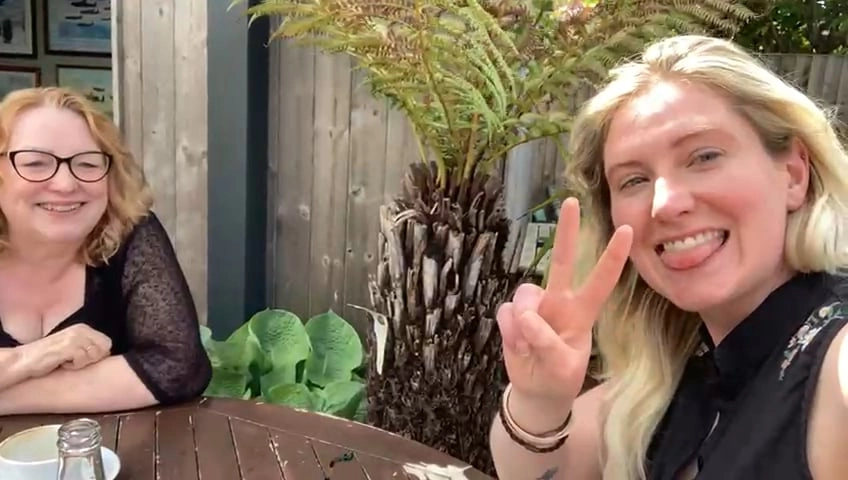
She created an amazing organisational system in Notion and when I saw it, I thought, I want that.
Except, looking back, I’m not sure I actually wanted her actual system. I think I just wanted to be organised like Fifi.
And because she’s a good friend, she spent ages helping me set it all up. She showed me around, explained how everything worked and showed me all the clever things it could do. And it was really impressive.
But it wasn’t right for me.
There was nothing wrong with Notion, you can make it as simple or complex as you want.
And there was certainly nothing wrong with the system Fifi had created. It worked beautifully for her because it suited the way she thinks and works. However, for me, there was just too much to remember and maintain, and I realised fairly quickly that I was never realistically going to keep using it.
I wonder if you’ve ever done something similar? Maybe you’ve seen somebody else’s planner, app, filing system or beautifully organised business and thought, Oh God, THAT’S what I need. If I could just do it like that, I’d finally get myself sorted.
But sometimes we choose systems for the person we wish we were rather than the person we actually are.
I wanted to be more organised like Fifi, but I’m not Fifi. I don’t have her brain, I’m not particularly technically minded and the fact that something works brilliantly for her doesn’t mean it will work brilliantly for me.
And the same applies to you. You have things you’re naturally good at, things you enjoy, things you struggle with and your own particular way of working. So rather than looking for the best organisational system, perhaps it makes more sense to look for the one that actually fits you.
(Check out the podcast I did with Fifi Using introvert superpowers to attract more clients)
The simplest organisational system might be the best one
One of the problems with organisational tools is that they’re very keen to tell us about everything they can do. You can add another field, create another category, set up an automation, connect another board, download another app... and before you know it, organising yourself has become a job in its own right.
If organisation doesn’t come naturally to you, I wonder whether it’s more useful to come at it from the opposite direction.
Rather than asking What else could this system do?, ask yourself, How little do I actually need it to do?
What is the problem you’re trying to solve? What do you genuinely need to keep track of? And what would be the simplest possible way of doing that?
Because every extra step you add is another thing you have to remember to do. And if you’re already someone who struggles to keep on top of things, creating a complicated system that needs lots of looking after probably isn't going to make your life any easier.
Which brings me to something I’ve decided to call the Ordinary Tuesday Test.
Would your organisational system pass the Ordinary Tuesday Test?
It’s easy to use a fabulous new organisational system when you’ve just created it. You’ve spent hours setting everything up, you’re feeling enthusiastic and New Organised You has officially arrived.
But what about an ordinary Tuesday three weeks later?
You’ve got back-to-back clients, you’re tired, there are emails waiting for you and you’ve just walked upstairs and completely forgotten why you went up there. Are you really going to want to spend time maintaining your fabulous new productivity system?
That, I think, is the test.
Because if a system is too complicated to use on an ordinary, slightly chaotic Tuesday, you’re probably not going to keep using it. And then all those hours you spent creating the thing have been wasted.
A system doesn't work simply because you managed to set it up beautifully. It works if you keep using it.
The simple system that finally worked for me
So, after hours of trying different things and attempting to find the perfect solution, what sophisticated organisational system did I finally settle on?
Trello and a Google spreadsheet.
Yep. Pretty much the things I was already using.
Trello was familiar. Google was familiar. I didn't need to learn a completely new platform or try to remember to go somewhere I wasn't already going.
The only slight problem was that I’m rubbish at spreadsheets. I know how to put things into them, but creating one that does useful things is not my forte. But fortunately, I knew someone who could do it for me: ChatGPT.
I explained what I needed, what I wanted to keep track of and how I wanted to use it, and it created the spreadsheet for me. I didn’t need to become good at spreadsheets or spend three evenings watching YouTube tutorials. I just needed a spreadsheet that worked.
So after spending hours and hours looking for a better solution, I’d pretty much arrived back where I started. And actually, that turned out to be the lesson I needed.
How to find an organisational system that works for you
If you’re struggling to keep organised, you don’t necessarily need to organise your entire life. Start with the thing that’s actually causing you problems.
If you keep losing track of your blog ideas, for example, you don't need a Complete Life Organisation System with 14 dashboards and a morning routine. You just need somewhere reliable to put your blog ideas.
So before you download another app or buy another notebook, have a think about what you actually need. What are you struggling to keep track of? Is there something you already use that could do the job? What's the minimum amount of information you need to record, and could you remove some steps rather than adding more?
And perhaps most importantly, will you actually remember to look at it?
The aim isn’t to create another job for yourself. It’s to spend less time looking for things, remembering things and maintaining systems, so you’ve got more time and energy for your clients, your marketing and everything else that matters in your practice.
Think about that ordinary Tuesday. Not the enthusiastic first day when you’re setting everything up and feeling extremely pleased with yourself. Will tired, busy, slightly distracted you still use it three weeks from now?
If the answer is no, make it simpler.
You don't have to become an organised person
I also want to mention something else because I know I’ve done this to myself plenty of times.
When you struggle with organisation, it can very quickly turn into, Why can’t I do this? Everybody else seems to manage it. I’m an adult, for goodness’ sake. Why am I so rubbish at keeping on top of things?
And then you see someone like Fifi with her fabulous Notion system and it seems to confirm it. Look! Other people CAN do this!
But maybe you don’t need to become the most organised person in the world. Maybe you’ve simply been trying to use systems that don’t suit the way you naturally work.
You don’t need Fifi’s brain. You need something that makes life easier for the brain you already have.
If that happens to be a scruffy notebook and your Google Calendar rather than an all-singing, all-dancing app, so be it. The system is supposed to serve you; you’re not supposed to spend your life trying to bend yourself into shape so you can serve the system.
Could your marketing feel simpler too?
Actually, there’s quite a nice connection between all of this and Find Your Focus.
Maybe your website needs some work. You know you should probably do something with Google. You’ve been meaning to write some blogs, someone has told you that you need to be on Instagram, and then there’s SEO, directories, networking, LinkedIn and whatever else has been added to your mental list this week.
There are SO many things you could be doing to grow your private practice, and none of them is necessarily a bad idea. But you cannot give your proper attention to all of them at once.
That’s what Find Your Focus is for.
During our 90-minute 1:1 session, we’ll look at your private practice as a whole, but we’ll also look at you: what you want, what you’re good at, what you enjoy, what you struggle with and, importantly, what you’re realistically going to keep doing.
There’s no point in me sitting there telling you how brilliant blogging can be if you hate writing and know perfectly well you’re never going to do it. We need to find the things that make sense for your practice and make sense for you.
From there, we’ll work out what deserves your attention now and, just as importantly, what you can stop worrying about for the moment. Instead of reaching the end of another busy week wondering whether any of the things you’ve been doing will actually make a difference, you’ll know what you’re working on, why you’re working on it and what can wait.
And I think there’s something incredibly freeing about being able to say, That’s a good idea, but it’s not for now.
The waiting list for Find Your Focus is open now, and there are a couple of good reasons to get yourself on it. I’ll be offering a special launch price, and people on the waiting list will get early access, which also means you’ll have first choice of the available sessions and a better chance of getting the day and time that suits you.
So if you’re reading this thinking, Do you know what, I really could do with somebody sitting down with me and helping me sort through all of this, get yourself on the waiting list.
Make running your private practice easier for you
If you’ve always thought of yourself as someone who’s just not very organised, I’m not going to tell you there’s a magical answer that will turn you into someone with beautifully colour-coded folders and a labelled drawer for spare batteries by this time next week.
I certainly haven’t found it.
But I do think it’s worth noticing where being disorganised is making things more difficult than they need to be. What do you keep forgetting? What are you losing track of? Where are you spending far too much time trying to remember what you're supposed to be doing next?
And instead of asking, What’s the best system for organising this?, try asking yourself, What’s the simplest system I could realistically see myself continuing to use?
Because that’s what I’ve finally realised through all of this. The point of getting organised isn’t to become an organised person.
It’s to make it easier to do the things that matter.